
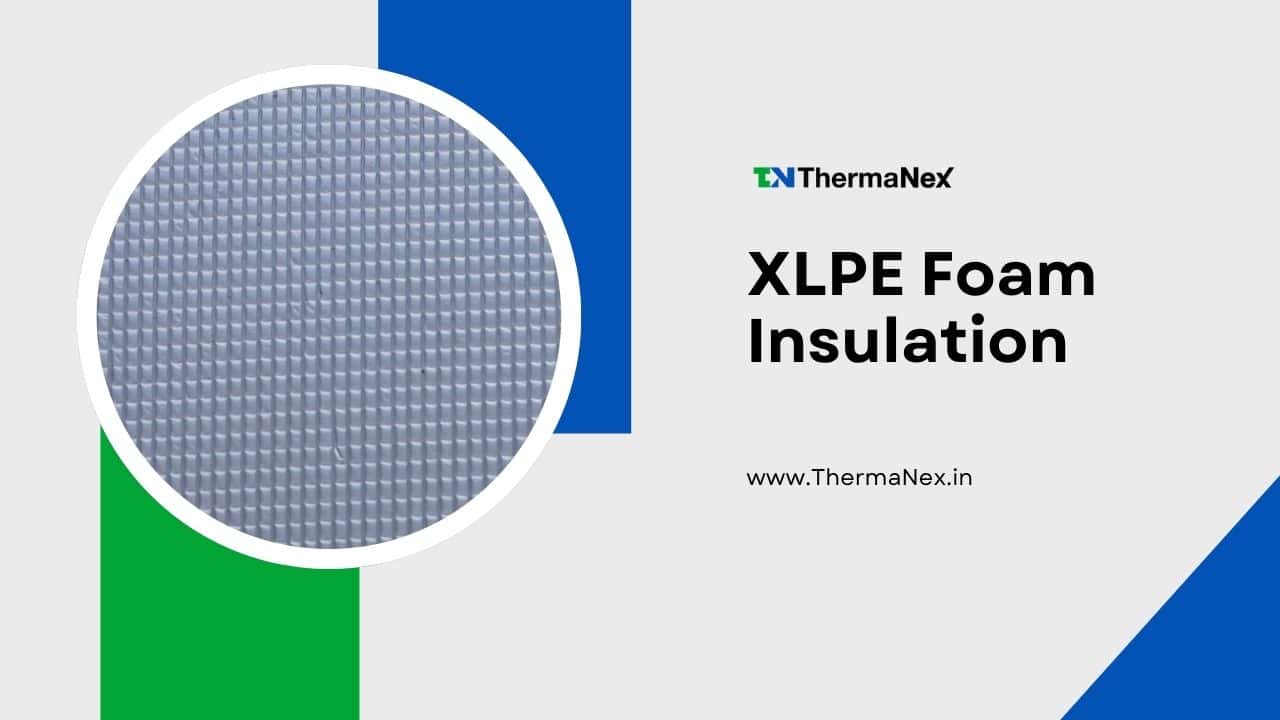
It’s a high-performance, closed-cell cross-linked polyethylene (XLPE) foam that boosts your HVAC duct efficiency by minimizing conductive and convective heat transfer, reducing thermal bridging and preventing condensation. By improving insulation R-value, sealing air leaks, and adding moisture resistance and acoustic damping, XLPE lowers your system’s runtime, cuts energy bills, extends equipment life, and helps you meet modern building standards and occupant comfort expectations.
Key Takeaways:
- High thermal resistance: XLPE offers consistent R-value that reduces heat transfer through ducts and lowers HVAC load.
- Moisture and vapor resistance: Closed-cell structure prevents water uptake and condensation, protecting ductwork and maintaining efficiency.
- Reduced air leakage and thermal bridging: Tight-fitting, flexible material minimizes seams and gaps, improving delivery efficiency.
- Durable, long-term performance: Resists compression, aging, and microbial growth, preserving insulation effectiveness and cutting lifecycle costs.
- Easy installation and acoustic benefits: Lightweight, conformable panels speed installation around fittings and also dampen noise from airflow.
Understanding XLPE Foam Insulation
You’ll find XLPE (cross‑linked polyethylene) is a closed‑cell foam engineered for HVAC use, with typical thermal conductivity around 0.034–0.040 W/m·K and service temperatures roughly −40 to +95 °C. Its low vapor permeability and light weight make it easy to fit around rectangular and round ducts, while OEM thickness options (6, 9, 13, 19, 25 mm) let you balance R‑value, space constraints, and installation speed.
New to insulation? Learn the main purpose of thermal insulation and why it’s vital for energy efficiency.
Composition and Properties
XLPE is produced by cross‑linking polyethylene chains to form a stable, elastic matrix filled with inert gas cells—usually >90% closed cells—yielding densities commonly between 25–120 kg/m³.
XLPE absorbs less than 1% water by volume. It has low thermal conductivity and good resistance to compression. Its formulas meet standard fire and flammability rules. This means it resists moisture, mechanical damage, and microbial growth in duct environments.
Benefits of XLPE Foam in Insulation
For your HVAC ducts, XLPE cuts conductive heat transfer and offers an effective vapor retarder, reducing condensation risk on chilled surfaces. It also provides measurable acoustic damping, is lightweight for easier handling, and typically delivers long service life with minimal maintenance, helping you lower energy losses and improve occupant comfort without bulky assemblies.
Quantitatively, a 13 mm XLPE liner gives an R‑value near 0.37 m²·K/W (0.013 m / 0.035 W/m·K), while 25 mm approaches 0.71 m²·K/W, so doubling thickness roughly doubles resistance.
You can expect airborne noise reductions of about 2–6 dB depending on system geometry, and the sub‑1% moisture uptake directly reduces corrosion‑under‑insulation risk on metal ducts.
The Role of HVAC Ducts in Energy Efficiency
Ducts move conditioned air but often create 20–30% system losses when leaky or under-insulated, especially through attics and crawlspaces. By specifying XLPE foam (R≈3.5–3.8 per inch) and sealing joints you cut transfer and condensation risks; field retrofits combining sealing and insulation have trimmed HVAC energy use by up to 15%. For material performance data, consult How Effective Is PE Insulation Sheet in HVAC Applications?
Importance of Proper Insulation
You prevent thermal losses, reduce humidity issues, and keep supply-air temperatures within 2–3°F of design over long runs by using correct insulation thickness and continuous coverage.
Field measurements show properly insulated ducts lower runtime and increase comfort, with some projects achieving 10–20% lower heating/cooling bills after upgrades to insulation and sealing.
Common HVAC Duct Issues
You often encounter leaks, poorly sealed connections, inadequate insulation, and thermal bridging; older systems commonly exhibit 10–30% leakage by airflow.
Mechanical damage, sagging runs and exposed ducts in unconditioned spaces amplify losses and can trigger mold or corrosion when condensation forms on cooler surfaces.
Addressing these problems means you should pressure-test ducts, prioritize sealing with mastic or approved tapes, and add continuous XLPE insulation with proper vapor management. For example, sealing to leakage class A can cut losses dramatically, and adding 1–2 inches of XLPE to attic ducts often restores system efficiency while preventing surface condensation and lowering fan energy by reducing return losses.
How XLPE Foam Insulation Enhances HVAC Duct Efficiency
XLPE’s closed‑cell structure gives you low thermal conductivity (~0.035–0.040 W/m·K) and R‑values around 3–3.5 per inch, so your ducts lose far less heat to ambient air. Field studies show duct insulation retrofits often deliver 5–15% HVAC energy savings when combined with sealing. For product guidance and installation tips you can Enhance HVAC Systems with Elastomeric Foam Insulation to compare materials and thicknesses.
Thermal Resistance and Airflow
With 25–50 mm (1–2 in) of XLPE you raise duct surface temperatures and reduce convective heat transfer; that lowers stratification and keeps supply air at design temperature. In practice, a 25 mm layer can cut steady‑state heat flux by roughly a third versus uninsulated metal, and maintaining smooth internal surfaces preserves airflow, so your fan curves and static pressure remain within design margins.
Reduction of Energy Loss
By limiting conduction and preventing condensation you reduce reheating and compressor cycling, which directly trims runtime.
Installations pairing 25–50 mm XLPE with sealed joints have been shown to halve duct‑related thermal losses in many retrofits, translating to measurable drops in peak load and kilowatt‑hour consumption for buildings under 50,000 ft².
Focus on continuous coverage, taped seams, and insulated fittings to avoid thermal bridges that reduce performance. Use closed-cell XLPE over 25 mm thick where ducts pass through unconditioned spaces. Check results with infrared scans and energy monitoring before and after installation. This often shows 5–12% savings for the whole system and less on/off cycling that extends equipment life.
Installation and Application of XLPE Foam
Best Practices for Installation
When you install XLPE on ducts, prepare surfaces by cleaning and drying and select 6–25 mm thickness based on duct temperature and climate. Use factory-taped seams or acrylic adhesive with 50 mm overlaps, seal joints with compatible foil tape, and avoid compressing the foam. Maintain 10–20 mm clearance at fittings, install a vapor barrier where condensation risk exists, and verify continuity at transitions to preserve thermal performance and service life.
Case Studies and Examples
You’ll find retrofit projects in offices, hospitals, and data centers show measurable HVAC savings after switching to XLPE.
Reported improvements range from 6–18% in HVAC energy use, with payback periods typically between 1.5 and 4 years depending on duct area, insulation thickness, and climate. Field measurements often recorded 6–15°C reductions in duct surface temperatures and improved system stability.
- Office tower, Chicago — 3,200 m² duct surface; 12 mm XLPE; 8% HVAC energy reduction; annual savings 63,000 kWh; payback 2.3 years.
- General hospital, London — 5,000 m² duct surface; 25 mm XLPE; 11.5% chilled-energy reduction; annual savings 96,500 kWh; payback 3.0 years.
- Data center, Singapore — 1,200 m² duct surface; 20 mm XLPE; 18% cooling-load reduction; annual savings 210,000 kWh; payback 1.7 years.
Looking deeper, you should evaluate duct surface ΔT, installation continuity, and measured thermal losses to validate savings. Projects with careful seam sealing and correct thickness perform better than average.
Studies with instruments showed duct surface temperature drops of 6–15°C. They also showed less heat loss per meter. This makes lifecycle cost and carbon calculations easier for retrofit decisions.
- Municipal library retrofit — 800 m² duct; 10 mm XLPE; duct surface −7°C; heat loss cut ~22 W/m; annual savings 18,400 kWh; CO2 avoided ~3.6 t; payback 2.8 years.
- University campus upgrade — 2,400 m² duct; 15 mm XLPE; average surface −10°C; thermal transfer reduced ~35 W/m; annual savings 74,000 kWh; ROI 2.1 years.
- Manufacturing plant project — 6,000 m² duct; 30 mm XLPE with foil; surface −14°C; peak loss reduction ~55 W/m; annual savings 310,000 kWh; simple payback 1.6 years.
Comparing XLPE Foam with Other Insulation Materials
Side-by-side properties
| Material | How it compares to XLPE foam |
| XLPE Foam | R≈4.0–4.5 per inch (λ≈0.033–0.038 W/m·K), closed-cell, low vapor permeability, flexible, easy to install on curved ducts; common service temp −50 to +85°C. |
| Fiberglass Batt/Wrap | R≈3.0–3.7 per inch, cheaper per ft² but higher moisture risk and air bypass unless properly jacketted; you may need more thickness to match XLPE’s moisture performance. |
| Mineral Wool | R≈3.0–3.3 per inch, better fire resistance and sound attenuation, but heavier and less effective as an integrated vapor retarder compared with closed-cell XLPE. |
| Polyiso Rigid Board | R≈6–6.5 per inch (best R-value), rigid and good for straight runs; however, it’s harder to fit around elbows and typically needs mechanical fastening or adhesive. |
| Closed‑cell Spray Polyurethane Foam (SPF) | R≈6–7 per inch, excellent air sealing and high R, but higher material/labor cost and on‑site installation controls; XLPE is faster for retrofit ductwork. |
| Elastomeric Rubber | Similar thermal performance and vapor control to XLPE; elastomeric often used in cold applications with good long‑term flexibility, while XLPE can be lighter and easier to handle. |
Advantages and Disadvantages
You benefit from XLPE’s closed‑cell structure that cuts conduction and moisture ingress—field reports commonly note 8–12% duct loss reductions—while enjoying flexible, low‑weight installs on curved or congested runs.
However, you’ll pay more than basic fiberglass and should avoid prolonged UV exposure or sustained temperatures above ~85°C; long‑term performance hinges on proper seam sealing and protected exterior finishes.
Cost-Effectiveness Analysis
You typically see paybacks of 2–6 years for XLPE duct insulation on retrofits in temperate climates when combined with sealing, given 8–12% HVAC energy reductions; hotter or leakier systems push returns toward the short end.
Material-plus-labor often exceeds fiberglass upfront, but energy savings and reduced maintenance tilt lifecycle costs in XLPE’s favor.
Drilling deeper, you should quantify your building: for a 50,000–100,000 ft² office with average HVAC load, insulating and sealing ductwork with XLPE can translate to annual savings of roughly $5,000–$25,000 depending on local energy rates and system condition. Also factor installation speed—factory‑measured tubular XLPE kits cut field labor—and available utility rebates for duct upgrades, which can shorten payback by 6–24 months in many jurisdictions.
Future Trends in HVAC Insulation Technologies
Innovations in Insulation Materials
You will see vacuum insulated panels (VIPs), aerogel blankets, and phase-change materials (PCMs) used more where space or peak-load control matters. VIPs can reduce heat transfer by 70–90% compared to same-thickness conventional foam. Aerogels provide high R-value in thin layers. PCMs can shift peak thermal loads by 2–6 hours to lower peak HVAC capacity. Pilot projects using graphene-enhanced foams report 10–20% thinner duct assemblies for equivalent performance, letting you reclaim ceiling space without sacrificing R-value.
Choosing Sustainable Insulation Materials
You should choose products with Environmental Product Declarations (EPDs), recycled content, and third-party certifications like GREENGUARD or Cradle to Cradle.
These help measure impacts. Picking higher-performance, longer-lasting insulation can cut whole-building energy use by 20–40% during its life. Also weigh upfront cost against lifecycle savings and local disposal/recycling infrastructure when selecting materials for your projects.
XLPE foam has specific sustainability trade-offs you must consider. Cross-linked polyethylene does not melt again, which limits mechanical recycling. It often ends up in material-to-energy recovery or special chemical recycling. Look for manufacturers that offer take-back programs, use at least 30% recycled content, or have Environmental Product Declarations (EPDs) verifying lower embodied carbon. Doing this can shorten payback periods to about 3–7 years. It reduces HVAC energy use and lowers lifecycle emissions compared to replacing with lower-performing, easily recyclable alternatives.
To wrap up
Taking this into account, XLPE foam insulation raises your HVAC duct energy efficiency by increasing thermal resistance, minimizing heat loss and gain, and reducing condensation risk, which streamlines system performance and lowers energy costs. Its lightweight, durable form and adaptable installation help you maintain airtight ducts and reduce maintenance needs, delivering reliable long-term savings and improved comfort in modern buildings.
FAQ
Q: What is XLPE foam insulation and why is it used on HVAC ducts in modern buildings?
A: XLPE (cross-linked polyethylene) foam is a closed-cell, flexible insulation material with low thermal conductivity, low water vapor permeability, and good compressive strength. It is used on ducts because it provides consistent R-value per inch, resists moisture and mold, dampens noise and vibration, is lightweight and easy to install, and withstands typical mechanical stresses in commercial and residential duct runs.
Q: How does XLPE foam reduce HVAC energy consumption?
A: XLPE lowers conductive heat gain and loss through duct walls by providing a stable thermal barrier (typical R-values around 3.5–4.0 per inch depending on product). By reducing temperature differentials between supply air and surrounding spaces, it cuts fan and compressor runtime, reduces load on heating/cooling equipment, and improves system capacity and control—translating to lower energy use and improved comfort.
Q: How does XLPE foam help control condensation and moisture-related problems on ductwork?
A: Because XLPE is closed-cell with low vapor permeability, it inhibits moisture ingress and surface sweating on cold ducts, reducing conditions that cause corrosion and microbial growth. Proper thickness and continuous application, combined with sealed joints and protected penetrations, limit thermal bridges and maintain surface temperatures above dew point to prevent condensation formation.
Q: What are best-practice installation and detailing techniques for XLPE on ducts to maximize efficiency?
Install continuous, uncompressed insulation that fully covers fittings, seams, and flanges. Use tapes or adhesives and mechanical fasteners that the manufacturer recommends. Avoid gaps and thermal bridges at supports and penetrations. Protect exposed insulation from UV light and mechanical damage. Follow thickness and sealing rules from energy codes and project thermal calculations.
Q: How does XLPE compare to other duct insulations (fiberglass, elastomeric) on cost, performance, and lifecycle?
XLPE usually weighs less when installed. It resists moisture better and is easier to handle than fiberglass. It often costs less than premium elastomeric (nitrile) products. It also provides similar thermal and acoustic performance. Lifecycle benefits include less maintenance from mold and corrosion control and strong resistance to compression. Payback depends on climate, duct location (conditioned or unconditioned spaces), and energy costs. XLPE often provides good lifecycle savings when installed and sealed properly.