
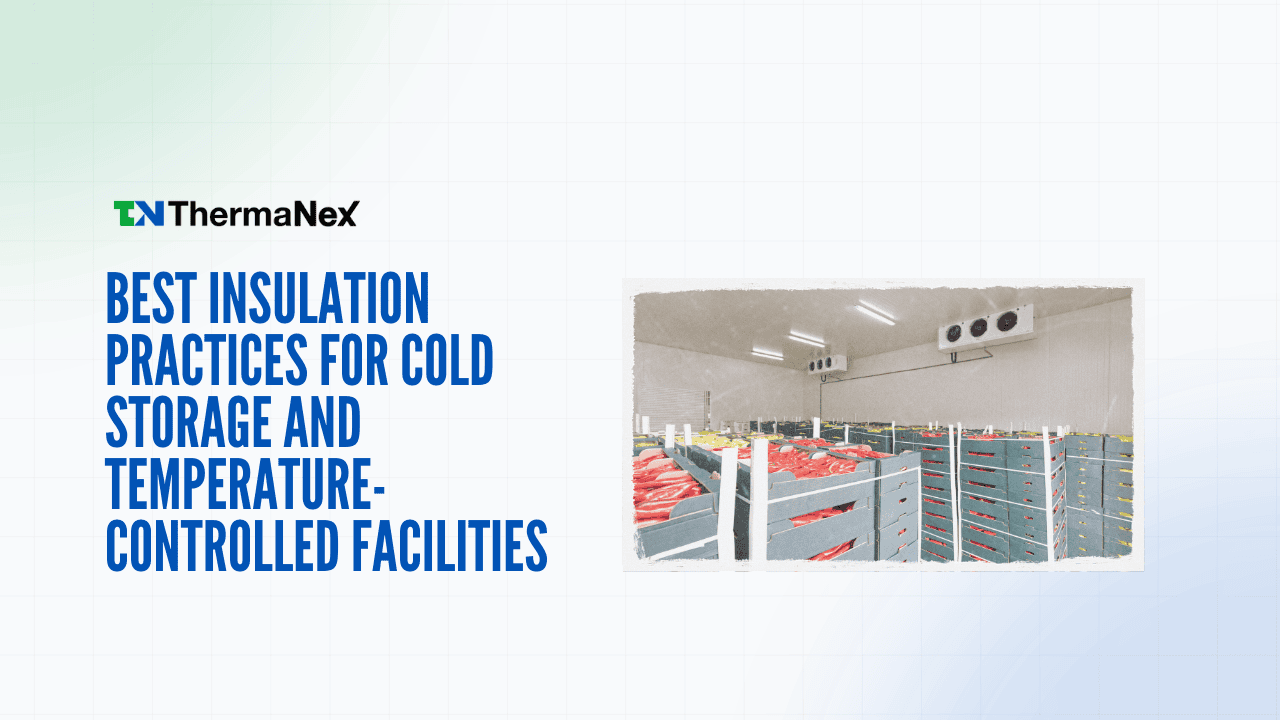
You should design and maintain your insulation systems that minimize thermal bridging, use high-R-value materials like closed-cell spray foam or PIR panels, ensure continuous vapor and air barriers, seal all joints and penetrations, control condensation with proper drainage and temperature gradients, and schedule regular inspections and maintenance to preserve performance and energy efficiency while protecting product integrity and reducing operating costs.
Key Takeaways:
- Use continuous, high-R-value insulation and minimize thermal bridges by extending insulation across walls, ceilings, floors and around doors/docks; fully seal joints and penetrations to prevent heat ingress.
- Control moisture with a properly located vapor retarder (typically on the warm side), low-perm materials where needed, and sealed seams to prevent condensation, frost, and mold.
- Require professional installation and regular inspections: correct fastening, movement joints, coordinated HVAC/refrigeration design, maintained seals, and compliance with fire and building codes.
Importance of Insulation in Cold Storage
Proper insulation directly lowers your operating costs and protects product integrity by reducing heat gain, air infiltration, and moisture ingress; studies show well-sealed, high-R-value envelopes can cut refrigeration energy use by up to 30% in retrofit projects, and using continuous insulation plus thermal breaks prevents cold spots that shorten equipment life and increase spoilage risk.
Energy Efficiency
You should specify panel types (PIR/PUR, XPS, or closed-cell spray) and thickness based on load and climate-common retrofit upgrades move from 75 mm to 150 mm to halve conductive losses; combining high R-value boards, continuous insulation, and proper sealing often yields 20-35% energy savings and allows you to right-size compressors for lower capital and maintenance costs.Energy Efficiency Breakdown
| Strategy | Impact / Example |
| Upgrade panel thickness | Reduces conductive heat gain; retrofit 75→150 mm can cut load ~20-30% |
| Continuous insulation | Eliminates thermal bridges at joints and supports uniform temperatures |
| High-performance core (PIR/PUR) | Higher R-value per mm, smaller footprint, faster ROI in tight sites |
| Air sealing &g; vapor barriers | Prevents infiltration and condensation; reduces defrost cycles |
Temperature Maintenance
You need insulation that maintains setpoints and minimizes stratification: combine insulated panels with thermal breaks, double-door airlocks, and strip curtains to keep product zones within ±1-2°C; pharmaceutical cold rooms typically require ±1°C control, while distribution centers benefit from zone partitioning to limit temperature swing during pallet movement.
You should place temperature sensors in load centers and near doors, stagger defrost schedules to avoid synchronized warming, and manage humidity to prevent frost and microbial risks; for example, frozen storage at −18°C tolerates low humidity, whereas fresh produce staging at 0-4°C demands 85-95% RH control to limit weight loss and spoilage.Temperature Maintenance Details
| Measure | Benefit / Example |
| Sensor placement | Detects stratification; place at load center, high/low points, and near doors |
| Airlocks & strip curtains | Limit infiltration during loading; cut transient warm-up events |
| Staggered defrost cycles | Prevents ambient spikes and reduces cumulative product warming |
| Humidity control | Protects product quality-fresh produce 0-4°C needs high RH; frozen storage needs low RH |
Types of Insulation Materials
| Polyisocyanurate (Polyiso) | R‑value ~6.0-6.5 per inch; best for walls/roofs above −10°C; high initial R‑value. |
| Extruded Polystyrene (XPS) | R‑value ~5.0 per inch; strong moisture resistance; common in below‑grade and panel systems. |
| Expanded Polystyrene (EPS) | R‑value ~3.6-4.0 per inch; cost‑effective, tolerates some moisture, used in sandwich panels. |
| Closed‑cell Spray Foam | R‑value ~6-7 per inch; acts as air and vapor barrier when applied ≥2 in; adds structural rigidity. |
| Open‑cell Spray Foam | R‑value ~3.5 per inch; effective for sound control and air sealing in non‑flood risk areas. |
Rigid Foam Insulation
You’ll find rigid foams-polyiso, XPS, EPS-specified for continuous insulation on cold storage walls and ceilings; polyiso delivers ~6-6.5 R/in but loses performance in very low temps, XPS holds ~5 R/in with superior moisture resistance, and EPS offers 3.6-4 R/in at lower cost; installers commonly use 1-4 in boards to meet target U‑values while preventing thermal bridging at metal panel joints.
Spray Foam Insulation
You can use closed‑cell spray foam when you need high R‑value and vapor control-about 6-7 R/in and effective barrier performance at ~2 in thickness-while open‑cell provides ~3.5 R/in for cavity fills and air sealing; application fills gaps, reduces convective losses, and often replaces separate air/vapor barriers in retrofit and new builds.
For deeper detail, closed‑cell spray foam at 2-4 in is common in walk‑in freezers to meet tight air leakage targets and control interstitial condensation; it bonds to metal panels, increases panel stiffness, and resists water absorption, but you must use certified applicators, account for higher material and labor costs (installed closed‑cell often several dollars per board‑foot), and ensure compliance with fire/thermal barrier codes when leaving foam exposed.
- You should match material R‑value per inch to your target U‑value and expected service temperature.
- Prioritize moisture management: XPS or closed‑cell SPF where water intrusion risk is high.
- Choose installer qualifications and testing (blower door, thermal imaging) to validate performance.
- Any selection should balance R‑value, moisture control, installer capability, and budget to protect your product quality.
Insulation Installation Best Practices
Position insulation continuously across framing, panels and service penetrations to remove thermal bridges and maintain vapor control. Stagger and overlap seams by at least 25 mm, use mechanical fasteners with sealed washers, and select vapor-impermeable facings for freezer envelopes. Verify adhesion and thickness during installation and follow manufacturer cure times to avoid voids or compression that cut R-value.
Sealing Gaps and Joints
Fill gaps larger than 6 mm (1/4″) with closed-cell spray polyurethane or backer rod plus polyurethane sealant; use butyl tape or pressure-sensitive tape for panel seams and silicone or elastomeric gaskets at service penetrations. Properly sealed joints can reduce air infiltration significantly and prevent moisture-driven condensation at cold surfaces; inspect seams after 24-48 hours and reseal any shrinkage or gaps.
Proper Thickness and Coverage
Match thickness to target R-value and space use: for walk-in coolers 50-100 mm (2-4″) of closed-cell spray foam (R≈6-7 per inch) is typical, while frozen rooms often need 100-150 mm (4-6″) or more. Ensure continuous coverage over studs and avoid compressing batt insulation, which can reduce effective R by up to 20%.
Double-check manufacturer R-values and select materials accordingly-XPS typically offers ~R‑5 per inch, closed-cell spray ~R‑6 to R‑7 per inch. Use thermal imaging or core sampling to verify installed thickness and spot voids. In retrofit projects, increasing average wall thickness from 75 mm to 150 mm has repeatedly shown measurable energy savings (field reports often cite 10-20% reductions in refrigeration load), so balance upfront cost against lifecycle energy use and downtime for installation.
Maintenance of Insulation Systems
You should schedule regular maintenance to extend service life and reduce thermal loss: perform visual checks monthly, full inspections quarterly, and thermal imaging annually to detect hidden voids or moisture. Use a hygrometer to keep relative humidity below 60% in refrigerated spaces and monitor utility data-an unexplained 5% rise in energy use often signals insulation issues. Focus inspections on vapor-barrier integrity, door seals, penetrations, and areas showing ice or mold to prevent progressive damage.
Regular Inspections
You should conduct monthly walk-throughs to identify stains, bulging, seam separation, or compression, and run quarterly detailed checks including infrared thermography and selective core sampling. Infrared scans will reveal 2-5°C thermal anomalies indicative of voids or wet insulation; follow up by measuring thickness at multiple points-losses over 10% of nominal thickness require investigation. Log findings, tag affected zones, and prioritize fixes based on energy impact and proximity to sensitive product zones.
Repair and Replacement
You should patch small breaches immediately with closed-cell spray polyurethane or foil-faced butyl tape, and prioritize full panel replacement when damage exceeds 15-20% of a panel, R-value drops more than 10%, or compression exceeds about 25 mm. Complete urgent repairs within 72 hours to limit moisture migration, schedule larger replacements during low-demand windows, and match new insulation density and thickness to maintain system R-value and vapor control.
You should begin repairs by drying and disinfecting the area, then verify R-value with a heat-flow meter or core test before replacing materials. When installing new panels, overlap the vapor barrier 50-75 mm and seal with 50 mm butyl or foil tape, using mechanical fasteners per manufacturer spacing (typically 150-300 mm). For pipe penetrations and doors, fit custom collars and resilient sealants; sequencing-dry, test, seal, then insulate-minimizes rework and restores most of the original thermal performance.
Regulatory Standards and Compliance
You must meet ASHRAE 90.1 energy targets, FDA Food Code/ISO 22000 food-safety expectations and local energy codes; typical design targets fall between R‑20 and R‑40 depending on storage temperature (-2°C to -30°C). Consult technical comparisons like Energy-Efficient Cold Room Insulation Materials: What to Know for lifecycle cost and thermal-performance tradeoffs, since proper insulation can cut refrigeration load by 15-30% in many retrofits.
Industry Guidelines
You should apply ASHRAE thermal-envelope guidance, HACCP monitoring protocols and NSF/ANSI material standards; HACCP programs typically require continuous logging with alarm setpoints within ±1°C and documented calibration. Specify PIR, PUR, XPS or vacuum insulated panels where space, thermal bridging or long-term heat flux projections demand higher R-values per inch.
Local Building Codes
You will encounter local rules on fire ratings, vapor barriers and allowable foam thickness-some U.S. jurisdictions mandate sprinkler protection or intumescent coatings for foam cores beyond ~4.5 inches. Plan to submit thermal calculations and obtain third-party inspections or municipality sign-off before occupancy.
Dig into specific references: in the U.S., IECC/IBC and state energy codes plus NFPA tests (e.g., ASTM E84/NFPA 286) commonly govern facing flammability and assembly compliance; in the UK, review Approved Document L and relevant fire performance requirements. Assemble U‑value and condensation risk calculations, manufacturer cut sheets, commissioning reports and witnessed tests (thermal scans, alarm integration) to streamline permit approval and final certification.
Emerging Technologies in Insulation
New materials like vacuum insulated panels (VIPs), aerogel blankets, and phase-change composites let you get far higher R-values per inch-VIPs can deliver roughly 5-15× the thermal resistance of conventional foams, aerogels about R‑10/inch, while polyiso still offers ~R‑6/inch for bulk applications. You can pair these with sensor-embedded panels for real‑time moisture and temperature monitoring. For a practical overview and spec guidance see Everything You Need to Know About Cold Storage Insulation.
Sustainable Materials
Recycled PET boards, bio-based polyols, cork, and sheep’s wool let you lower embodied carbon while maintaining thermal performance; recycled PET panels now match closed‑cell foam R-values in many applications. Many manufacturers report lifecycle carbon reductions up to 50% versus petroleum-based foams, and you can choose cork or wool where moisture resilience matters because they retain insulating value when damp.
Advances in Insulation Techniques
Prefabricated insulated sandwich panels with factory-applied vapor barriers reduce on-site gaps and improve airtightness, and tapered insulation designs prevent localized condensation on ceilings and roofs. You should also specify thermal-break splines at panel connections to limit bridging; for tight cavities, thin VIPs let you achieve target R-values without sacrificing aisle width.
During installation, insist on butyl tape and sealants rated to -40°C and a minimum 50 mm joint overlap; follow manufacturer’s fastener spacing-commonly 300-600 mm centers-to preserve panel compression and vapor continuity. Sensor-equipped panels let you monitor ΔT and relative humidity along critical seams so you can spot insulation failures early. In many retrofits, replacing fragmented insulation with continuous, factory-sealed panels reduces spot heat gain and simplifies HACCP compliance.
Conclusion
Upon reflecting, you should prioritize continuous monitoring, high-performance vapor barriers, properly sealed joints, and appropriate R-value selection to minimize thermal bridging and moisture intrusion; maintain regular maintenance schedules and train staff so your systems remain efficient, compliant, and responsive to changing loads and regulatory requirements.
FAQ
Q: How do I choose the best insulation materials for cold storage and temperature-controlled facilities?
A: Select materials based on thermal resistance (R-value per inch), moisture resistance, compressive strength, fire performance and compatibility with the refrigeration system. Rigid foams such as polyisocyanurate (PIR/PUR) and extruded polystyrene (XPS) offer high R-values and good moisture resistance; XPS and cellular glass are preferred where freeze-thaw and high humidity occur. Mineral wool provides fire resistance but needs a continuous vapor control layer to prevent moisture absorption. For floors subject to forklift loads choose high-compressive-strength boards or poured insulation topped with an appropriate structural slab. Factor in total assembly U-value targets, local energy codes, available cavity depth, and thermal bridging: continuous exterior insulation or insulated liners that minimize metal framing penetration will reduce heat leaks. Verify manufacturer recommendations for adhesives, fasteners and facings for cold environments and ensure products have relevant FM/UL fire and moisture performance ratings.
Q: What are the best practices for vapor control and condensation prevention in cold rooms?
A: Place a continuous vapor control layer on the warm side of the insulation to stop warm, moist air from migrating into cold assemblies where it can condense. Seal all seams, joints, penetrations and fastener heads with compatible tapes and sealants to maintain continuity. Use facers or low-permeance membranes rated for the facility’s operating temperatures and humidity cycles; consider aluminized facers or foil laminates for extreme duty. Design door systems and loading docks with airlocks, strip curtains and high-quality gaskets to limit infiltration. Insulate and vapor-seal refrigeration piping and valves, provide thermal breaks at metal supports, and include drip pans and drainage for condensate. Avoid installing impermeable barriers on the cold side that could trap moisture within the insulation assembly and allow freeze-thaw damage.
Q: What installation and maintenance steps maximize insulation performance and service life?
A: Ensure continuous, gap-free insulation installation: stagger board joints, avoid compression under fasteners, and mechanically secure or adhesive-bond according to manufacturer guidance. Flash and seal all penetrations (piping, conduits, anchors) and use thermal-breaks where metal components cross insulated assemblies. Insulate doors, ceilings, floors and dock areas with materials and thicknesses matched to loads and target U-values. Implement a scheduled inspection and maintenance program that checks seals, door gaskets, fasteners, and for wet or compressed insulation; use infrared thermography and moisture testing after events that risk intrusion. Repair or replace wet or damaged insulation immediately to prevent microbial growth and thermal loss. Coordinate insulation choices with refrigeration controls, defrost strategy and building automation to avoid cycling that can increase moisture risk. For retrofits, remove compromised layers, install a continuous vapor control system and upgrade to higher-R materials where feasible to meet current codes and reduce operating cost.