
You get lower energy bills, consistent temperature control, moisture resistance, and rapid installation when you use air bubble insulation in poultry farms and warehouses; its reflective barrier and trapped air layers reduce heat transfer, limit condensation, and create a healthier environment for birds and stored goods, giving you reliable performance and lower lifecycle maintenance compared with many conventional insulations.
Key Takeaways:
- Enhances temperature control and lowers energy costs by combining radiant-reflective and insulating properties, stabilizing conditions for poultry health and stored goods.
- Reduces condensation, humidity-related mold and corrosion risks, improving biosecurity and product shelf life in barns and warehouses.
- Lightweight, easy to install, pest- and moisture-resistant, and low-maintenance—delivering fast payback and long-term durability.
Understanding Air Bubble Insulation
What is Air Bubble Insulation?
You’ll find it is a laminated material with a polyethylene bubble core sandwiched between reflective foil facings; typical bubble heights run 3–8 mm and the foil reflects over 90% of radiant energy. Installed as both a radiant barrier and an air barrier, it traps a thin still-air layer and contributes roughly R‑1 to R‑2 per layer depending on how it’s mounted. Common installs include under metal roofs, inside wall cavities, and lining container or bay doors to cut conduction and condensation.
Benefits for Thermal Efficiency
It reduces radiant and convective heat transfer, lowering peak roof loads and winter heat loss; reflective faces can bounce back about 90–97% of radiant energy, and a properly placed air gap lets each layer add usable R‑value. You’ll get faster temperature recovery, fewer HVAC cycles, and many projects report 10–25% reductions in heating or fuel use when bubble insulation supplements existing systems.
For best results, position the reflective face toward an air space of roughly 10–25 mm and seal seams with aluminum tape; stacking two layers or pairing with fiberglass, rigid board, or spray foam raises overall R‑value and cuts drafts. On poultry farms this stabilizes brood temperatures and reduces fuel needed during cold snaps, while in warehouses it limits vertical stratification, lowers condensation risk, and protects stored goods from temperature swings.
Application in Poultry Farms
Temperature Control and Animal Welfare
You gain tighter climate control by installing air bubble insulation: houses often stay 3–6°F warmer in winter and exhibit ±2°F daily stability, which lowers brood heating needs and reduces stress on chicks. Improved uniformity cuts drafts and wet spots that lead to respiratory issues, and field reports link better thermal consistency to fewer mortalities and steadier weight gain across flocks.
Temperature Benefits
| Issue | Impact with Air Bubble Insulation |
|---|---|
| Heat loss | 3–6°F warmer interior, reduced heating runtime |
| Radiant heat gain | 30–50% lower radiant transfer in summer with reflective layers |
| Bird performance | More uniform growth, fewer chill-related losses |
Energy Savings and Cost Efficiency
You can expect measurable energy reductions: typical installations yield 10–20% lower heating demand in temperate to cold climates, trimming fuel bills and lowering peak loads during cold snaps. Payback often comes from a single winter to a few seasons, depending on fuel price and house tightness.
For example, if your 50,000 ft² broiler house uses about 200,000 kWh/year, a 15% reduction saves 30,000 kWh—roughly $3,000–$4,500/year at $0.10–$0.15/kWh. You also gain operational savings from reduced heater cycling and maintenance; combining insulation with sealed ventilation and targeted brood heaters typically shortens ROI to 1–3 years, especially where energy costs exceed $0.10/kWh or where subsidies for efficiency upgrades are available.
Application in Warehouses
Installed under metal roofs or along interior walls, air bubble insulation cuts radiant heat transfer and controls condensation without major structural changes. You can get effective R-values in the R‑2 to R‑6 range when paired with reflective foil and an air gap, and typical material costs run well under $2 per sq ft, letting you retrofit 50,000–200,000 sq ft buildings affordably. Case studies show faster temperature recovery after door cycles and fewer hot spots near dock doors when bubble insulation is combined with proper sealing.
Protecting Inventory and Equipment
Your inventory sees fewer temperature swings and lower humidity when air bubble insulation is installed, which reduces mold risk and corrosion on metal components. For perishable or sensitive goods, stabilizing ambient conditions by even 3–5°F cuts spoilage and rejects; meanwhile equipment like conveyor motors and HVAC units run less often, extending service intervals. You also lower hot‑spot formation near skylights and loading bays, protecting packaging, electronics, and stored materials from heat damage.
Reducing Energy Costs
By reflecting radiant heat and improving overall thermal resistance, bubble insulation can trim HVAC loads by roughly 10–25% depending on climate, roof color, and existing insulation. You’ll see faster cooling recovery after dock openings and smaller temperature stratification, which reduces runtime for rooftop units. Many facilities report paybacks in 1–4 years when combining bubble insulation with air sealing and reflective coatings.
For example, if your facility spends $100,000 annually on heating and cooling, a 15% reduction saves $15,000 a year; with an installation cost of $40,000, that yields about a 2.7‑year payback. Savings scale with energy price and climate: hotter regions see larger cooling benefits, while cold climates gain from reduced heat loss. Installation quality matters—sealed seams, continuous coverage, and pairing with existing insulation maximize measured savings.
Comparison with Traditional Insulation
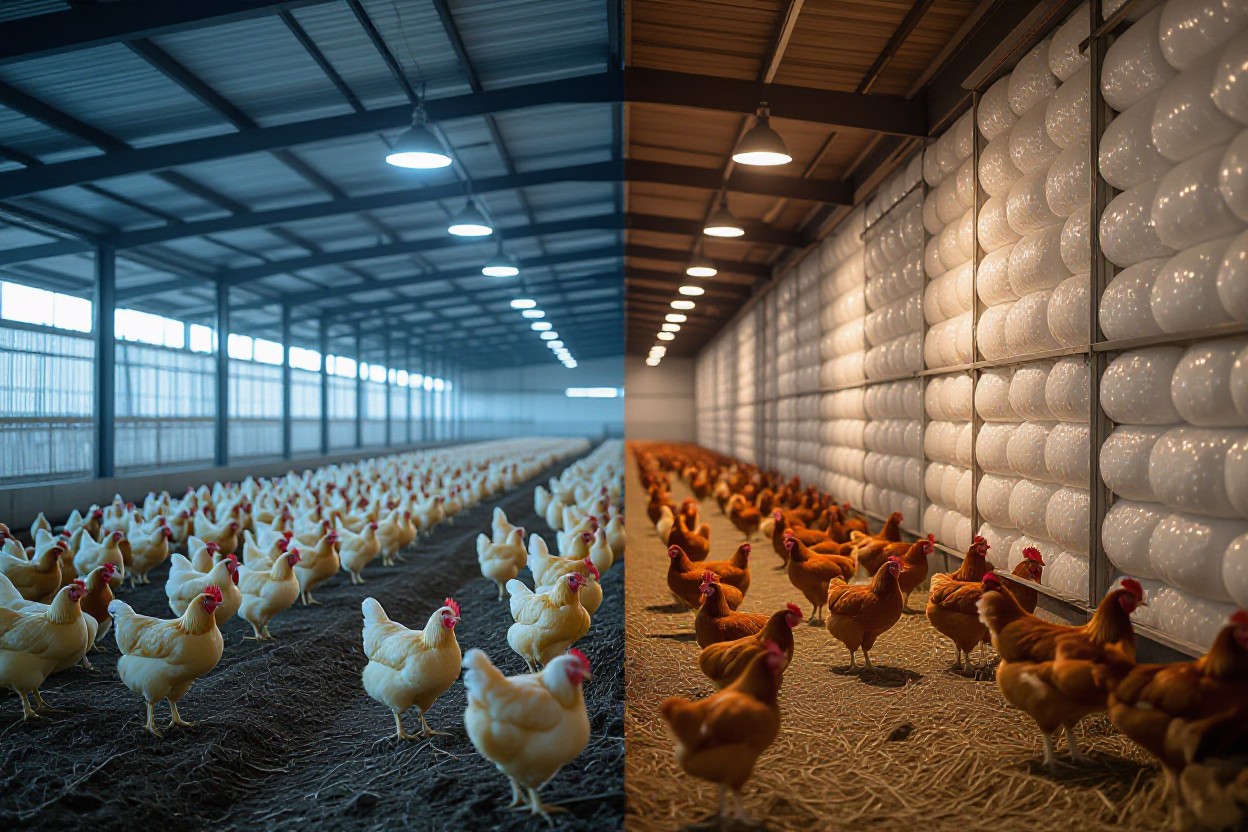
Side-by-side summary
| Feature | Air Bubble vs Traditional |
| Thermal performance | Air-bubble systems typically deliver effective R-values in the R-3 to R-6 range per layer depending on air gaps and reflective facings; traditional fiberglass batts give R-13 to R-19 for common wall depths but suffer thermal bridging at studs. |
| Installation | You can install bubble rolls faster and lighter, cutting labor time by 30–50% on average versus batt or sprayed systems, and reducing downtime in active barns/warehouses. |
| Moisture & condensation | Multi-layer bubble with vents limits condensation and resists moisture migration; traditional loose-fill or batts can compress or trap moisture, lowering performance over time. |
| Weight & space | Bubble insulation is low-mass and thin, saving floor/ceiling headroom; traditional systems often require thicker cavities or furring strips to reach comparable performance. |
| Cost & ROI | Material cost per ft² can be lower and installation quicker, yielding payback windows often within 3–7 years depending on energy prices and building size compared with retrofit batt upgrades. |
| Durability | Bubble products resist settling and biological degradation, maintaining performance 20+ years with minimal maintenance, whereas some fiber products settle or require replacement sooner. |
Performance Metrics
You get measurable gains in peak-load reduction and moisture control: typical installations reduce heating or cooling peaks by 10–20%, depending on climate and sealing. With properly installed air gaps and reflective facings, apparent R-values rise and you cut thermal bridging compared with exposed stud framing. Field tests show stabilized interior temperatures and reduced HVAC cycling, which directly improves energy predictability for poultry houses and large warehouses.
Long-Term Investment Benefits
Your upfront spend often converts to predictable savings: many operations see 10–25% lower annual energy bills after switching to multi-layer air bubble systems, with payback in 3–7 years based on local fuel costs and building size. Reduced maintenance needs and resistance to settling mean you avoid mid-life re-insulation costs common with some traditional materials.
For example, on a 20,000 ft² barn incurring $2/ft² annual heating costs ($40,000/year), a 15% energy reduction saves $6,000 annually. If the upgrade costs $18,000–$36,000, you reach payback in roughly 3–6 years. Additionally, faster installation reduces labor disruption and downtime, and the long service life (commonly 20–30+ years) lowers total lifecycle cost versus repeated fixes or replacements of conventional insulation.
Installation and Maintenance Considerations
You’ll find bubble insulation lightweight and fast to handle, often installed as rolls or panels that you cut and fix with tape, staples or adhesives; a typical retrofit on a 10,000 sq ft shed can be completed by a crew of two in 3–4 days. For poultry-specific guidance see What are The Importance of Insulation in Poultry Housing? which outlines ventilation integration and humidity control strategies.
Ease of Installation
You can install bubble insulation with basic tools—utility knife, staple gun, and foil tape—and often without removing existing cladding. In practice, two people typically cover 1,000–1,500 sq ft per day when working on purlins or stud bays, and modular panels simplify roof retrofits, minimizing production downtime in both warehouses and poultry houses.
Longevity and Maintenance Requirements
You should plan inspections at least twice a year to check seams, tears and condensation points; foil-faced bubble products commonly last 15–25 years if shielded from UV and direct mechanical damage. Small rips are repairable with aluminum tape, and warranties frequently range from 10 to 20 years depending on manufacturer and application.
More proactive maintenance improves lifespan: clean dust and droppings weekly in high-dust poultry rooms, install rodent guards because gnawing causes most failures, and verify vapor barriers after any roof leaks. Case studies show routine quarterly checks reduced repair costs by 40% over five years in commercial broiler houses, so build a simple inspection log and action plan you follow consistently.
You can see consistent performance improvements in operating facilities; below are concise, metric-focused case studies that show how air bubble insulation performs in the field. For more on poultry-specific benefits consult How Is Insulation Beneficial For Poultry Farming
Warehouse Implementations
You can expect clear HVAC load reductions and better humidity control in warehouses: a 12,000–18,000 ft² facility routinely shows 25–35% lower year-round HVAC energy consumption after installing air bubble layers on roof and loading dock doors, with measurable drops in condensation-related product damage.
Operationally, your installation often takes 1–3 days for a medium facility, costs roughly $0.60–$1.20/ft² installed, and delivers payback in 12–24 months depending on local energy prices; additionally, sealing seams and using reflective facing can further lower peak heat gain by 6–10°C and extend equipment life by reducing cycling.
To wrap up
Considering all points, air bubble insulation gives you reliable thermal control, moisture resistance, and easy installation that lowers your energy bills, protects stock and livestock, and reduces condensation and pest ingress; by choosing it you improve biosecurity, cut operating costs, and extend building life, making it a practical, cost-effective solution for poultry farms and warehouses.
FAQ
Q: Why is air bubble insulation a smart choice for temperature control and energy efficiency in poultry farms and warehouses?
A: Air bubble insulation combines trapped air pockets and reflective surfaces to reduce heat transfer by conduction and radiation. That keeps indoor temperatures more stable, reducing heating and cooling loads on HVAC systems. For poultry farms this improves bird comfort and feed conversion by avoiding temperature swings; for warehouses it protects stored goods and reduces spoilage. The reduced HVAC runtime translates directly into lower utility bills and more consistent environmental control.
Q: How does air bubble insulation perform with moisture, condensation, and hygiene in agricultural and storage settings?
A: Many air bubble products include a vapor-resistant film that limits moisture penetration and surface condensation when installed correctly. Because the material is non-absorbent and resistant to mold and rot, it helps maintain drier roof and wall assemblies and reduces conditions that favor microbial growth. Properly detailed seams and flashings prevent leaks; the material is also easy to clean and does not provide a food source for pests, supporting biosecurity and product integrity.
Q: What should I expect for installation, durability, maintenance, and return on investment?
A: Air bubble insulation is lightweight and simple to handle, making retrofit work fast with minimal downtime—important for continuous poultry operations and active warehouses. It resists settling and degradation that affect some fibrous insulations, requires little routine maintenance, and is compatible with existing roof and wall systems. Initial material and labor costs are often lower than thicker rigid or sprayed systems, and energy savings plus reduced product loss typically produce a favorable payback period. Flame-retardant and multi-layer options are available to meet specific code and performance needs.